


Animation is one of the most dynamic creative industries in the world, and it has never stood still. From the early days of hand-drawn cel animation and stop-motion films to today’s hyper-realistic 3D productions, each era has been marked by groundbreaking innovations. What’s fascinating is that the pace of change is only accelerating. Advances in software, artificial intelligence, real-time rendering, and immersive platforms are not just transforming how animations are produced they’re also redefining how audiences interact with them.
Technology has democratised the process too. Once, only large studios with big budgets could create high-quality animations. Now, thanks to accessible tools, cloud-based workflows, and AI-powered support, independent creators and small teams are able to produce visually stunning work that competes on a global stage. This levelling of the playing field has given rise to a new wave of creativity, where innovation is driven as much by fresh perspectives as it is by powerful technology.
At the same time, audiences are becoming more sophisticated. With streaming platforms, video games, VR experiences, and interactive media dominating entertainment, viewers now expect stories that are immersive, personalised, and emotionally resonant. Animation is uniquely positioned to meet these expectations because it sits at the crossroads of art and technology. Whether it’s used for feature films, television, advertising, education, or even brand storytelling, animation is expanding its reach and impact in ways that were unthinkable just a decade ago.
These shifts raise important questions: What are the tools and techniques that will define the future of animation? How will AI and machine learning reshape creative workflows? Can virtual production pipelines streamline costs without compromising quality? And how will immersive technologies such as VR and AR change the way stories are told and experienced?
In this article, we’ll explore the most exciting and influential trends shaping the animation landscape today. From AI-assisted creativity and real-time rendering to the growth of interactive storytelling and the push for sustainable production, we’ll highlight the innovations that every animator, studio, and creative professional should keep on their radar. By staying ahead of these trends, creators can not only adapt to the demands of today’s audiences but also lead the charge in shaping the future of animation itself.
1. AI-Assisted Animation

Artificial intelligence (AI) is rapidly transforming the animation industry, and its influence is only set to grow. Traditionally, animators have spent countless hours on time-consuming and repetitive tasks such as creating in-between frames, cleaning up rough sketches, or rendering background details. With the introduction of AI-powered tools, much of this workload can now be automated, giving artists the freedom to focus on the creative aspects of storytelling rather than technical bottlenecks.
One of the most practical applications of AI in animation is in-betweening, the process of generating the transitional frames between two keyframes. What once required meticulous manual labour can now be completed within seconds using AI-driven software, drastically speeding up production. Similarly, AI can enhance visual effects by automatically simulating realistic textures, lighting conditions, and even physics-based movements such as water, smoke, or fabric. This not only saves time but also raises the overall quality of the animation, making it look more polished and lifelike.
AI is also being integrated into character animation and lip-syncing, areas that often consume large amounts of production time. For instance, AI can analyse recorded dialogue and automatically match it with corresponding mouth shapes and facial expressions, ensuring that characters appear natural and expressive. In video games and interactive media, this technology can even allow for real-time animation adjustments, creating a more immersive experience for players.
2. Real-Time Rendering
Real-time rendering is one of the most revolutionary shifts in the animation industry today. In the past, rendering transforming a 3D scene into its final image or sequence was one of the most time-consuming stages of production. Animators and studios often had to wait hours, sometimes even days, to see the results of small adjustments to lighting, textures, or camera angles. This not only slowed down workflows but also limited experimentation, since every change came with the burden of long render times.
With the arrival of real-time rendering engines such as Unreal Engine and Unity, this bottleneck has been drastically reduced. These powerful platforms allow animators to see changes instantly as they are made, providing immediate feedback and enabling faster iteration. For artists, this means they can experiment more freely with creative ideas tweaking lighting, adjusting character movements, or re-framing shots without losing momentum or waiting for hours to see results.
One of the most exciting applications of real-time rendering is in virtual production, a method that blends live-action filmmaking with digital environments. Instead of relying on green screens, filmmakers can shoot actors against massive LED walls displaying real-time 3D backgrounds powered by rendering engines. This approach has already been used in high-profile productions such as The Mandalorian, proving how transformative it can be. For animators, this technology opens new opportunities for creating immersive worlds that feel authentic while saving time and costs in post-production.
Another key area where real-time rendering shines is pre-visualisation. Directors and animators can now block out scenes, experiment with camera angles, and adjust the pacing of sequences on the fly, all while viewing a near-final version of the scene. This level of interactivity not only speeds up decision-making but also fosters greater collaboration between departments, as everyone can see a shared, evolving vision in real time.
3. Virtual Reality (VR) and Augmented Reality (AR) Integration
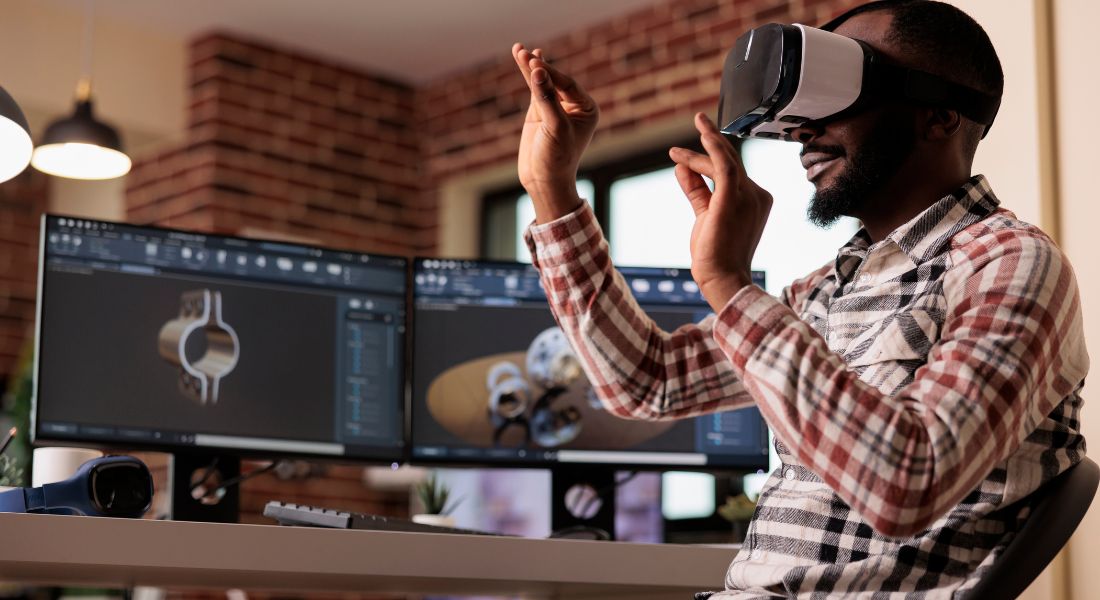
Virtual Reality (VR) and Augmented Reality (AR) are no longer niche technologies they are rapidly becoming central to the future of animation and interactive media. Unlike traditional 2D or 3D viewing experiences, VR and AR place the audience directly inside the story, transforming them from passive viewers into active participants. For animators, this shift requires not only technical expertise but also a fresh approach to storytelling, design, and user engagement.
In entertainment, VR allows viewers to step into fully realised worlds, whether it’s exploring a fantastical landscape, standing alongside animated characters, or experiencing a narrative from a first-person perspective. This level of immersion creates an emotional connection that traditional screens often cannot achieve. Popular platforms such as Meta Quest and PlayStation VR are expanding the reach of VR content, making it more accessible to mainstream audiences.
AR, on the other hand, blends the digital with the real world. Using smartphones, tablets, or wearable devices like AR glasses, audiences can see animated characters and objects layered seamlessly onto their physical surroundings. This has opened new creative opportunities in gaming, marketing, and social media. For example, AR filters on platforms like Instagram and Snapchat use animation to entertain and engage millions of users daily. Beyond fun filters, brands are leveraging AR animation to create interactive shopping experiences, product visualisations, and immersive advertising campaigns.
Education is another field being transformed by VR and AR animation. Instead of relying on textbooks or flat visuals, students can now learn through interactive, 3D environments. Imagine a history lesson where learners walk through a virtual recreation of ancient Rome, or a science class where they interact with animated models of the human body in augmented reality. These experiences make learning more engaging, memorable, and accessible across different age groups and learning styles.
4. Motion Capture and Performance Capture
Motion capture (often shortened to mocap) and performance capture have become essential tools in modern animation, bridging the gap between human performance and digital storytelling. At its core, motion capture involves recording the physical movements of actors and transferring that data onto digital characters. Performance capture takes it a step further, capturing not only body movement but also intricate facial expressions and subtle gestures, which are vital for creating believable, emotionally engaging characters.
In the past, animators had to rely entirely on hand-keyed animation to replicate human movement a process that was both time-consuming and limited in terms of realism. Today, advanced mocap systems use high-precision sensors and cameras to capture even the smallest details, from the flick of a wrist to a raised eyebrow. This data is then mapped directly onto 3D models, allowing animated characters to move and emote with a level of authenticity that would be difficult, if not impossible, to achieve manually.
One of the most well-known applications of performance capture can be seen in blockbuster films and AAA video games. Characters like Gollum in The Lord of the Rings, Neytiri in Avatar, and countless others were brought to life through actors whose performances were translated into richly detailed digital beings. The result is a more immersive and emotionally resonant experience for audiences, as they connect with characters who feel alive rather than artificial.
Beyond Hollywood, mocap is becoming increasingly important in television, advertising, and even independent projects. Thanks to more affordable equipment and software, small studios and individual creators can now harness the same technology once reserved for big-budget productions. This accessibility is encouraging experimentation, with animators using mocap for stylised characters, exaggerated movements, or even hybrid projects that blend realism with fantasy.
Facial capture technology has also advanced dramatically in recent years. Systems equipped with high-resolution cameras and AI-driven algorithms can now track minute muscle movements, enabling animators to capture emotions such as joy, sadness, or anger with stunning accuracy. This has huge implications for storytelling, as audiences are more likely to empathise with characters that display natural, human-like expressions.
5. Procedural and Generative Animation
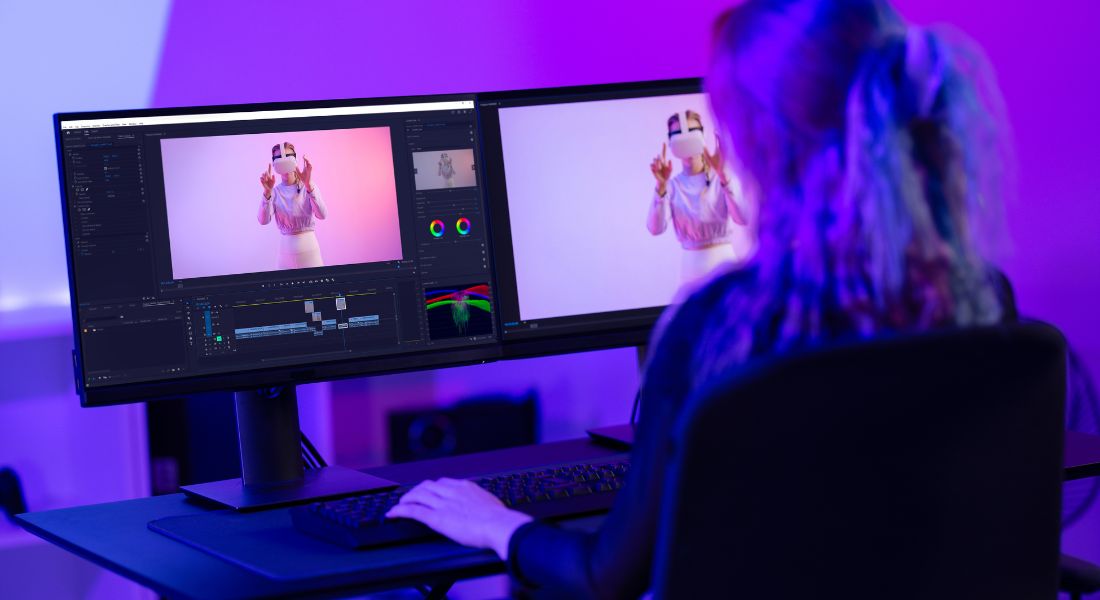
Procedural and generative animation are becoming increasingly influential in the way digital content is created, especially in industries where flexibility, scalability, and interactivity are essential. Unlike traditional animation, where every movement or visual detail is manually crafted by artists, procedural techniques use algorithms to generate motion, textures, or entire environments automatically. This approach dramatically reduces manual workload and allows creators to achieve results that would otherwise take weeks or even months of labour.
A classic example of procedural animation is the simulation of natural phenomena such as fire, water, smoke, or crowd behaviour. Instead of animating each element by hand, animators can rely on algorithms that mimic the physics of the real world, producing realistic and dynamic effects. For instance, thousands of raindrops or a bustling city crowd can be generated procedurally, each with subtle variations that enhance realism. This not only saves time but also ensures that no two scenes look exactly alike.
Generative animation takes this concept further by introducing responsiveness and adaptability. Here, the animation isn’t fixed; it changes based on input, context, or user interaction. This is particularly valuable in video games and interactive media, where no two experiences are the same. For example, generative systems can make non-playable characters (NPCs) behave uniquely depending on player actions, or dynamically adjust environmental details such as wind, lighting, or terrain in real time. This creates immersive, living worlds that feel vibrant and unpredictable.
For animators, procedural and generative approaches also open up creative possibilities beyond realism. Algorithms can be used to experiment with stylised visuals, abstract patterns, or surreal motion that would be difficult to achieve through traditional methods. This fusion of mathematics, coding, and artistry allows for bold, unconventional storytelling techniques that push the boundaries of what animation can look like.
Another important advantage is scalability. In industries like architecture, simulation, or virtual reality, procedural animation can generate vast landscapes, complex ecosystems, or detailed structures at a fraction of the cost and time. This makes it particularly attractive for projects that require massive amounts of content without sacrificing variety or quality.
6. Hybrid Styles and Mixed Media
One of the most exciting directions in modern animation is the rise of hybrid styles and mixed media. While animation has traditionally been divided into categories such as 2D, 3D, or stop-motion, today’s creators are breaking down those boundaries and blending techniques in bold new ways. By mixing different styles whether it’s hand-drawn animation with CGI, or live-action footage with digital overlays animators are finding fresh ways to tell stories and create distinctive visual experiences.
The appeal of hybrid animation lies in its ability to combine the emotional warmth of traditional methods with the technical sophistication of modern tools. For instance, 2D animation offers expressive, stylised aesthetics that can feel nostalgic or artistic, while 3D adds depth, realism, and dynamic camera movement. When combined, the result is a unique look that feels both familiar and innovative. A well-known example is Spider-Man: Into the Spider-Verse, which blended hand-drawn comic book aesthetics with advanced CGI to create a groundbreaking visual style that redefined how mainstream audiences view animation.
Mixed media is also flourishing in the integration of live-action and animation. This approach has been around for decades think of classics like Who Framed Roger Rabbit but advances in compositing and visual effects have made it far more seamless today. Brands use this technique in advertising to create playful campaigns where animated characters interact with real-world environments, while filmmakers use it to blur the line between fantasy and reality, enhancing storytelling in ways that pure live-action or pure animation cannot achieve on their own.
In television and digital media, hybrid styles are being used to appeal to diverse audiences who crave originality. Platforms like Netflix and Disney+ are investing in projects that push visual boundaries, experimenting with series that combine 2D character designs with richly detailed 3D environments, or blending stop-motion with CGI enhancements to achieve a handcrafted yet polished look. This layered approach gives each production a distinctive signature, helping it stand out in a crowded content market.
7. Cloud-Based Collaboration Tools
The rise of cloud-based collaboration tools has transformed the way animation studios and creative teams work. What was once considered a backup option has now become the industry standard, particularly in the wake of remote and hybrid workflows. With cloud platforms, teams no longer need to be in the same physical location to collaborate effectively they can work together in real time from anywhere in the world.
For animators, this shift means that complex projects involving multiple departments such as storyboarding, modelling, rigging, animation, and post-production can now be coordinated seamlessly in a shared digital space. Tools like Frame.io, ShotGrid, ftrack, and SyncSketch allow artists, producers, and directors to review, comment on, and update work instantly, eliminating the delays associated with sending large files back and forth. This not only improves productivity but also keeps creative momentum moving forward.
One of the biggest advantages of cloud-based platforms is their ability to enable global collaboration. Studios are no longer limited to hiring talent from their local region. Instead, they can tap into a worldwide network of artists, animators, and technical specialists. A studio in London, for instance, can work with a character designer in Tokyo, a compositor in Los Angeles, and a sound editor in Mumbai all within the same project pipeline. This flexibility not only broadens creative input but also helps manage costs by sourcing talent across different markets.
Final Thoughts: Shaping the Future of Animation
Keeping up with emerging trends and technologies is no longer optional`it’s essential for anyone working in animation. Whether it’s leveraging AI-assisted tools, experimenting with real-time rendering, or exploring immersive VR and AR experiences, adapting early can elevate your projects and storytelling to new heights. By staying informed and open to innovation, creators can not only meet audience expectations but also push the boundaries of what animation can achieve.
If you’re looking for expert guidance and high-quality production, you can contact our animation company in London to bring these emerging trends into your next creative endeavour.
